The question is not simply whether a tool can draft a reply. It is whether that reply uses current information, fits the lead’s situation, and reaches the right reviewer before anyone sends it. A polished sentence with the wrong price or promise can create more work than it saves.
What is an AI sales assistant?
Sales work includes research, qualification, follow-up, and record keeping. Some of those steps benefit from AI assistance. Others depend on judgment, approved offers, and a person taking responsibility for the result.
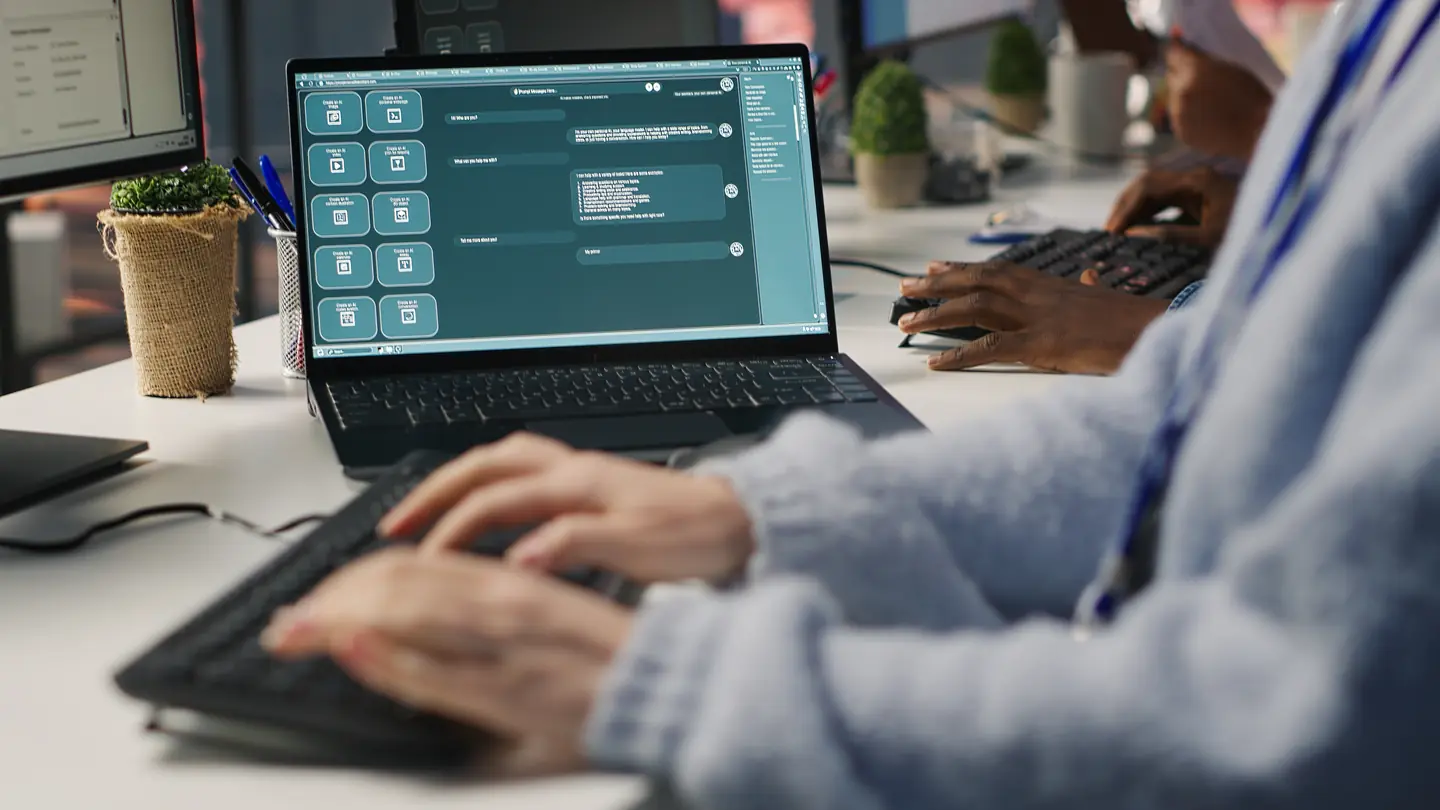
An AI sales assistant is a bounded workflow that helps a sales team complete a specific task. That task might be gathering context from approved records, organizing an inquiry, drafting a response for review, or proposing a next step under defined rules. It is not an automatic salesperson with permission to make every claim or contact every prospect.
AI sales assistant development connects the task, source data, interface, approval path, and evaluation. The scope determines whether the assistant produces internal suggestions, updates a CRM field, or prepares customer-facing material. Those differences affect permissions and testing.
Start with one sales decision.
We identify where time is being spent and what information a salesperson needs to act. For example, a form may capture a service request, company details, and a deadline. An assistant could organize those details for review. It never infers a budget, invents qualifications, or promises a delivery date your team has not approved.
Your team supplies current offer language, qualification rules, sales stages, and examples of good and bad handoffs. We map which outputs a person must approve and which fields may change. We also decide what happens when the record is incomplete or the prospect asks something outside the source material.
Build around approvals and data boundaries.
The agreed work can include a task and authority map, source preparation, prompt or decision workflow, CRM connection when in scope, review interface, evaluation examples, and an operating guide. We keep the assistant’s role narrow enough that your team can understand what it used and correct what it got wrong.
If your records are not reaching the CRM with the right context, CRM Integration comes first. If stable follow-up rules need to run without AI, CRM Automation is the simpler fit. The wider Development Services archive shows how those pieces connect.
Test the moments when the assistant must pause.
We review representative inquiries, missing data, outdated offers, ambiguous intent, and claims that require approval. The acceptance question is not whether the assistant writes fluently. It is whether it stays within approved information, sends the right cases to a person, and respects the CRM permissions your team chose.
AI Sales Assistant pricing and scope
An AI sales assistant is scoped around the decision it supports. Lead sources, CRM access, approval rules, response boundaries, evaluation, and human handoff drive price. It is not part of a standard website package by default. The written quote states the agreed workflow, integrations, testing, and any platform or ongoing operating costs.
Review published packages for standard offers. The assistant’s approved data and action boundaries need a separate estimate.
Make the next sales step clearer.
Look for one repeated sales task with a clear input and an expensive handoff. We map the assistant’s role, the human checkpoint, and the records the workflow needs.